

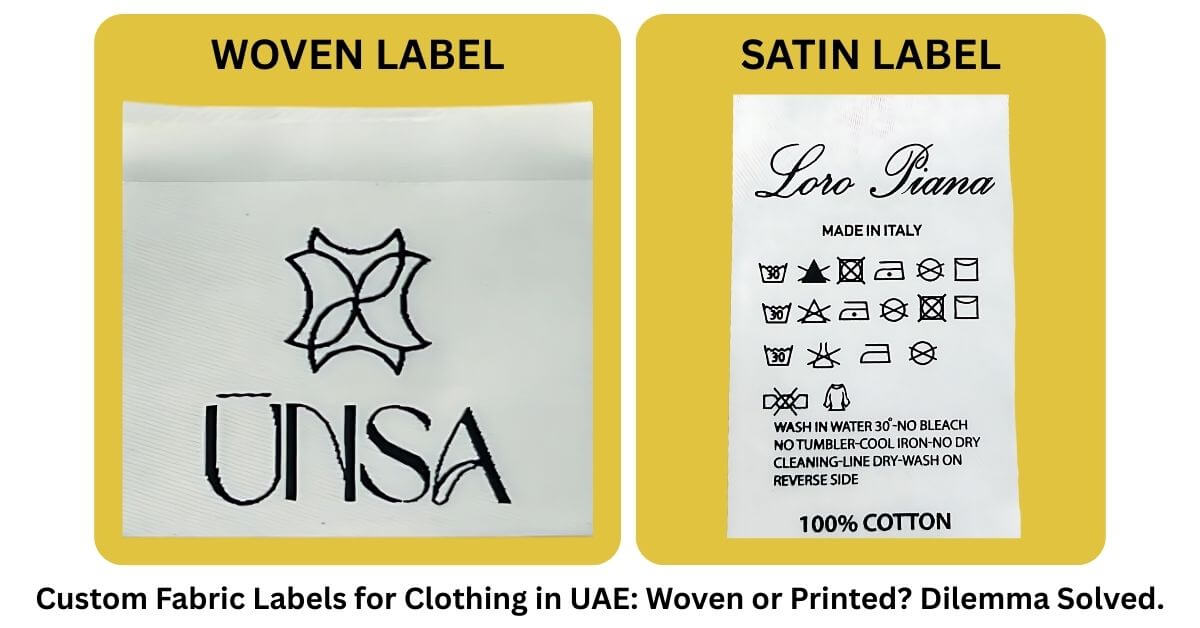
Regarding custom fabric labels for clothing in the UAE, Clothing brands often find themselves at a crossroads — should they go with woven fabric labels for that premium matching fashion Concepts in UAE, for a long-lasting feel, or choose printed labels made of satin fabric, for their clothing line based in UAE, for their versatility, and soft finish? for It’s a common dilemma for both emerging designers and established fashion houses. The right label doesn’t just tag a garment — it tells your brand’s story, reflects quality, and builds customer trust. In this post, we’ll help you decode the woven vs. printed label debate so you can make the best choice for your clothing line.
Why Fabric Labels for Clothing Matter in the UAE Fashion Industry
In the competitive fashion market, especially within the UAE’s fast-evolving industry, a garment is never complete without a label that defines its identity. Fabric labels serve multiple roles: Conveying brand recognition Sharing product specifications (size, fabric type) Providing care instructions Highlighting the origin of production, and Reinforcing perceived product value Today’s consumers are more brand-conscious than ever. A high-quality label signals attention to detail and can sway purchase decisions — especially in a saturated clothing market.
Woven Labels: A Timeless Branding Tool
Woven labels are crafted by interlacing threads to form text and graphics directly into the label. As it is Commonly made from polyester, cotton, or damask, they are well-suited for premium garments and designer lines.
Advantages of Woven Labels:
- Long-lasting quality – retains clarity even after numerous washes
- Upscale appearance – adds a high-end finish to garments
- Custom fit – perfect for logos, icons, and clean typography
- Versatile placement – can be sewn onto inside seams, collars, or hems
Disadvantages:
- Not ideal for intricate artwork – lacks the sharpness for fine print
- Higher cost for small runs – setup costs may be higher than printed labels
- Longer lead times – weaving takes more production time
Printed Labels: Flexible, Affordable & Fast
Printed labels involve applying ink or thermal transfer designs onto label materials such as satin, cotton, or nylon. These are widely used in both mass production and eco-conscious fashion labels.
Benefits of Printed garment Labels:
- Clear detail and readability – perfect for care symbols, detailed artwork, and fine print
- Soft texture – ideal for babywear or items worn close to the skin
- Lower production cost – great for startups or seasonal lines
- Fast turnaround – ideal for urgent or short-term requirements
Drawbacks of such textile tags:
- May fade over time – especially if washed frequently
- Less premium visual appeal – lacks the texture and richness of woven labels
Key Factors to Consider When Choosing Between Woven Fabric Labels and Printed Labels for Apparels
All things considered, Making the right decision depends on several brand-specific factors. Here’s how to evaluate your options:
1. Brand Identity & Market Positioning
- Luxury fashion brands: Woven labels reinforce a premium image.
- Streetwear, kidswear, eco brands: Printed labels can be trendy, soft, and functional.
2. Garment Material & Style
- Woven labels are ideal for outerwear, suits, and durable fabrics.
- Printed labels suit lightweight or delicate fabrics like silk, modal, or soft cotton.
3. Budget Allocation
- Small batch production: Printed labels are cost-effective with low MOQs.
- Large scale production: Woven labels become more economical over time.
4. Label Placement & Wearability
- Use woven labels when visibility matters (e.g., necklines, cuffs).
- Use printed labels where comfort is key (e.g., inside tags for undergarments).
The UAE Market: What Makes It Unique? Regarding Garment tags
After all, the UAE’s fashion industry is a blend of high-end couture, modest fashion, and emerging local labels. With a strong emphasis on quality and aesthetics, custom fabric labels play a vital role in brand differentiation. Whether selling through retail outlets in Dubai malls or online marketplaces like Noon and Amazon.ae, your label should align with both the functionality and style expectations of a modern consumer.
Where to Source Quality Fabric Labels for Clothing in the UAE
When sourcing custom woven or printed fabric labels in the UAE, consider the following:
Choose Garment Labels suppliers who offer:
- In-house design consultation
- Sample approval before mass production
- Both Durable materials and fade-resistant inks
- Fast turnaround and competitive pricing
Another key point is that working with local manufacturers gives you the benefit of quicker shipping, easier communication, and better quality control — crucial for growing brands.
Final Verdict: Woven vs. Printed — Which Should You Choose?
By comparison, there’s no universal answer — and that’s a good thing. The decision should be based on:
- Your brand’s personality
- Your target audience
- Your product type
- Your budget and timeline
👉 Pro Tip: Many UAE-based brands use a combination — woven labels for branding and printed labels for care instructions, as I have shown in the featured Image. In addition, You can experiment with both to find what suits your clothing best.
Ready to Level Up Brand with Custom Fabric Labels for Clothes?
Choosing the right label might seem like a small detail, but it has a lasting impact on how your products are perceived. In the fashion world, details matter — and your fabric label could be the subtle edge that sets your collection apart.
For premium woven and satin labels for your brand, contact Khalq for Brands:+971585838091