

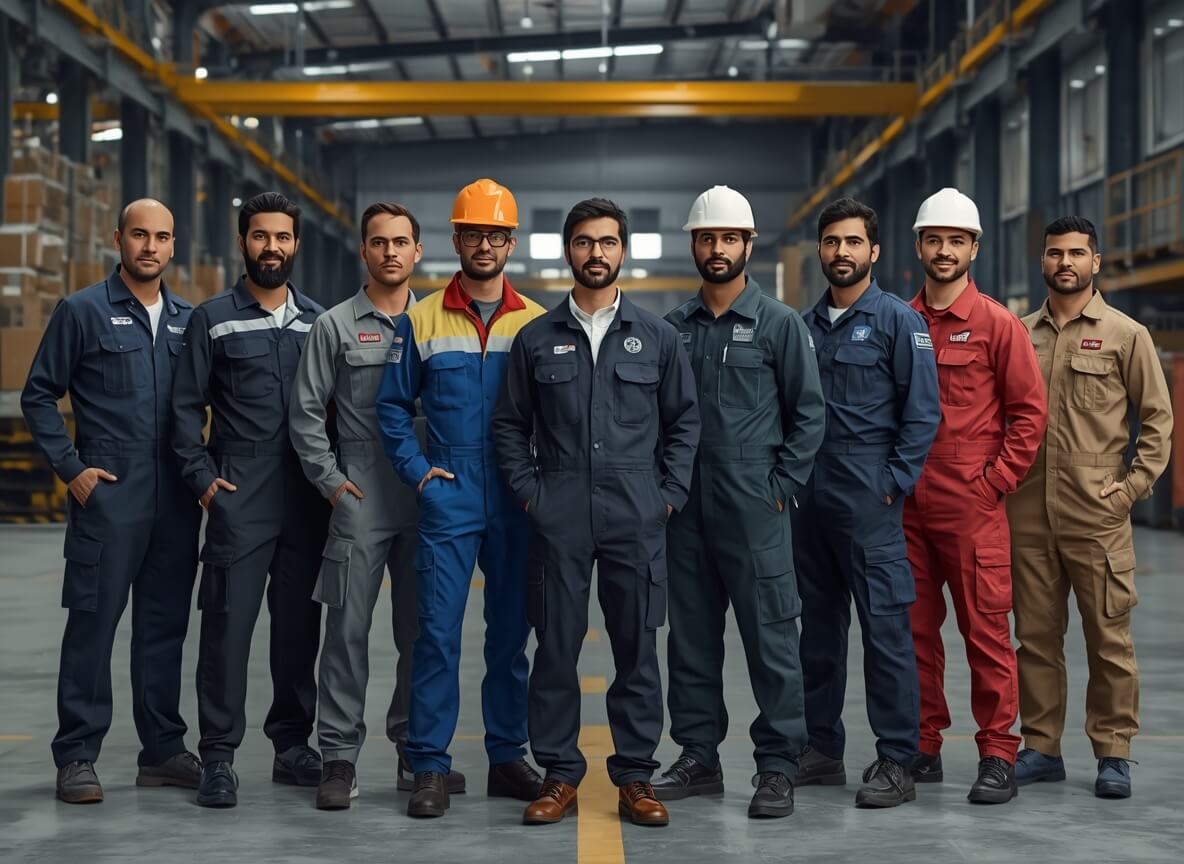
What Oil & Gas, Construction, Manufacturing & Logistics Companies Look for Before Buying Coveralls
For industries such as oil and gas, construction, manufacturing, and logistics, workwear is more than just a uniform. The right coveralls can help employees work comfortably, maintain a professional appearance, and meet workplace safety requirements.
Choosing the right industrial coveralls requires more than selecting a color and adding a company logo. Businesses need to consider the working environment, fabric quality, durability, employee comfort, customization options, and the specific demands of their industry.
For companies operating in the UAE, where employees may work in demanding outdoor and industrial environments, selecting suitable workwear becomes even more important.
Here are the key factors companies should consider before purchasing coveralls.
1. Fabric Quality and Durability
One of the first things companies look for when purchasing coveralls is the quality of the fabric.
Industrial employees may wear their uniforms for long hours and expose them to dust, dirt, heat, friction, and frequent washing. Low-quality fabrics can lose their shape, color, or strength after repeated use.
Businesses should therefore look for:
-
- Durable industrial-grade fabrics
-
- Strong stitching and reinforced seams
-
- Good resistance to regular washing
-
- Color retention
-
- Comfortable fabric weight
-
- Suitable breathability for the working environment
The ideal fabric depends on the industry and the conditions in which employees work.
2. Safety Requirements
Safety is a major consideration for industries such as oil and gas, construction, and manufacturing.
Depending on the workplace and job role, companies may require coveralls with specific protective properties. These can include flame-resistant, high-visibility, anti-static, or other specialized features.
Before placing a large order, businesses should understand their workplace requirements and choose coveralls that are appropriate for the risks employees may encounter.
Important: Protective claims and certifications should always be verified against the actual product specifications and applicable workplace requirements.
3. Comfort During Long Working Hours
Employees may spend eight, ten, or even more hours wearing their uniforms. A coverall that provides protection but feels uncomfortable can negatively affect the overall work experience.
Companies should consider:
-
- Breathable materials
-
- Comfortable fits
-
- Appropriate sizing
-
- Lightweight construction where suitable
-
- Flexible movement
-
- Proper ventilation
-
- Comfortable collars and cuffs
For UAE-based companies, fabric selection is particularly important when employees work outdoors or in hot environments.
4. Fit and Sizing Options
A professional workwear program should accommodate different body types.
Companies purchasing coveralls in bulk should check whether the supplier can provide a comprehensive size range rather than relying on a limited set of standard sizes.
A good sizing system helps employees move comfortably while maintaining a neat and professional appearance.
Businesses should also request samples or sizing information before confirming a large production order.
5. Industry-Specific Design
Not every industry requires the same type of coverall.
Oil & Gas
Oil and gas companies may prioritize protective properties, durability, visibility, and practical storage depending on the employee’s role and work environment.
Construction
Construction teams often need durable workwear that supports movement while providing practical features such as multiple pockets and high-visibility elements where required.
Manufacturing
Manufacturing employees may benefit from comfortable, durable uniforms designed for repetitive movement and long working hours.
Logistics
Logistics teams often need lightweight, comfortable workwear that allows employees to move easily while maintaining a consistent professional appearance.
This is why businesses should choose coveralls based on job requirements rather than simply selecting a standard uniform design.
6. Practical Pockets and Functional Features
Coveralls are workwear, so functionality matters.
Employees may need to carry small tools, pens, identification cards, mobile devices, or other workplace essentials.
Useful features can include:
-
- Multiple pockets
-
- Secure chest pockets
-
- Tool pockets
-
- Pen compartments
-
- Reinforced areas
-
- Strong zippers or closures
-
- Adjustable cuffs
-
- Utility loops
The right features depend on the employee’s daily responsibilities.
7. Customization and Company Branding
For many businesses, coveralls are also an important part of their corporate identity.
Companies commonly customize workwear with:
-
- Embroidered company logos
-
- Printed logos
-
- Employee names
-
- Department identification
-
- Company colors
-
- Reflective branding
-
- Job-role identification
Professional branding can help create a consistent appearance across teams while making employees easier to identify at workplaces.
For industrial businesses with multiple departments or locations, standardized branding can also support a more organized corporate image.
8. Color Selection
Color isn’t only about aesthetics.
Companies may select colors based on:
-
- Corporate branding
-
- Department identification
-
- Workplace visibility
-
- Maintenance requirements
-
- Industry conventions
-
- Environmental conditions
Dark colors can be practical in some environments, while high-visibility colors may be more appropriate for certain work areas.
The final choice should balance branding, functionality, visibility, and maintenance.
9. Heat and Climate Considerations
For companies operating in the UAE, climate should be an important part of the workwear decision.
Employees working outdoors or in hot industrial environments may benefit from breathable fabrics, suitable fabric weights, and designs that allow comfortable movement.
Instead of choosing coveralls purely based on appearance, businesses should consider how the uniform will perform during actual working conditions.
10. Ease of Maintenance
Industrial uniforms are frequently washed and exposed to demanding conditions.
Before ordering, companies should ask:
-
- How should the coveralls be washed?
-
- Will the color remain consistent after repeated washing?
-
- Are the seams reinforced?
-
- How durable is the embroidery or printing?
-
- Can the uniform withstand regular industrial use?
-
- What maintenance is required?
Easy-to-maintain workwear can help businesses reduce replacement frequency and simplify uniform management.
11. Supplier Customization Capability
Another important factor is the supplier’s ability to handle bulk and customized orders.
Companies should look for a workwear supplier that can provide:
-
- Custom sizes
-
- Multiple color options
-
- Logo embroidery
-
- Printing
-
- Industry-specific designs
-
- Samples before bulk production
-
- Consistent quality across large orders
-
- Reliable delivery schedules
For large organizations, consistency is especially important because employees across different locations should receive uniforms with the same specifications and branding.
12. Bulk Ordering and Cost Per Uniform
Price is naturally an important factor, but businesses shouldn’t evaluate coveralls based only on the initial purchase price.
A cheaper uniform may require more frequent replacement if the fabric, stitching, or branding doesn’t withstand regular industrial use.
Companies should consider the total value over the product’s usable life, including:
Purchase price + durability + maintenance + replacement frequency + customization + delivery
This provides a more realistic picture of the actual cost of the uniform program.
13. Delivery and Production Capacity
For companies managing hundreds or thousands of employees, production capacity matters.
Before placing an order, businesses should confirm:
-
- Minimum order quantities
-
- Production timelines
-
- Sample approval process
-
- Bulk production capacity
-
- Delivery schedule
-
- Reordering process
-
- Availability of consistent materials
A supplier capable of supporting future repeat orders can make uniform management much easier.
Coveralls Should Be Chosen for the Job, Not Just the Look
The right industrial coverall should balance durability, safety requirements, comfort, functionality, branding, and cost.
Whether you’re purchasing workwear for an oil and gas team, construction workforce, manufacturing facility, or logistics operation, understanding the actual working environment should be the starting point.
A professional uniform supplier can help businesses select suitable fabrics, designs, customization methods, and sizing options based on their requirements.
Why Choose KHALQ FOR BRANDS for Customized Workwear?
At KHALQ FOR BRANDS, businesses can explore customized workwear solutions designed around their branding and workforce requirements.
From company logo embroidery and printing to customized uniform designs, the focus is on creating professional workwear that represents your business consistently.
If your company is looking for custom coveralls, industrial uniforms, or workwear in the UAE, discuss your requirements with the KHALQ FOR BRANDS team.
-
What should companies consider when buying industrial coveralls?
Ordering everything together ensures consistent branding, simplifies supplier management, reduces shipping costs, and often lowers the total production cost.
-
Which industries commonly use coveralls?
Oil and gas, construction, manufacturing, logistics, maintenance, engineering, automotive, and other industrial sectors commonly use coveralls.
-
Can company logos be added to coveralls?
Yes. Depending on the garment and design, company logos can generally be added through embroidery or printing.
-
Are coveralls suitable for hot weather in the UAE?
Coveralls can be designed with fabrics and constructions suitable for hot working environments. Businesses should select materials based on the actual work conditions and required protective properties.
-
How can companies choose the right coverall fabric?
The fabric should be selected according to the working environment, required protection, durability, comfort, washing requirements, and applicable safety specifications.
-
Can companies order customized coveralls in bulk?
Yes. Businesses can work with uniform suppliers to develop customized coveralls in specific colors, sizes, designs, and branding requirements.
Get Your Customized Workwear Started
Looking for professional coveralls for your oil & gas, construction, manufacturing, or logistics team? Contact KHALQ FOR BRANDS to discuss your custom workwear requirements.